
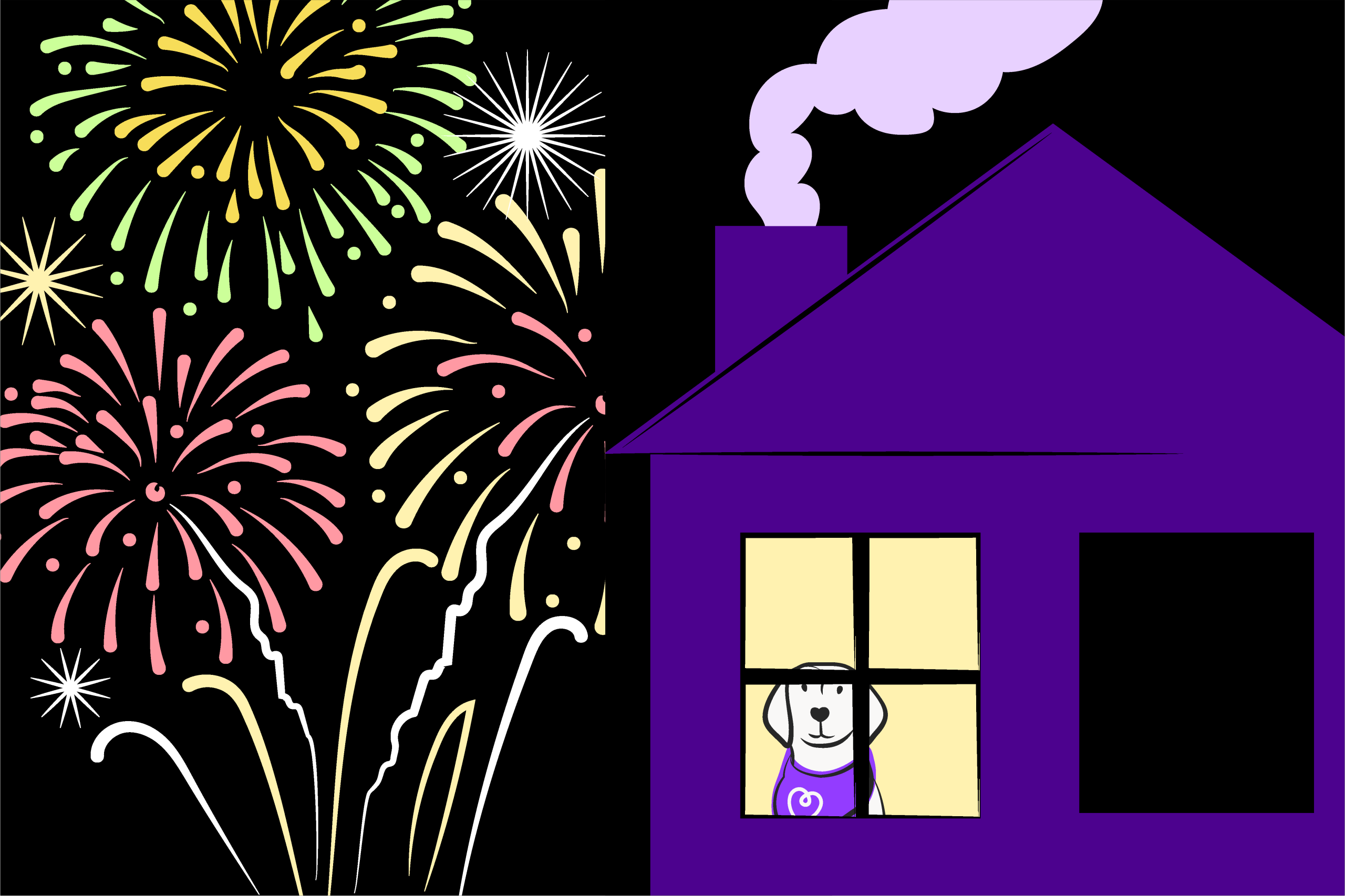
Fireworks aren’t just for Bonfire Night, it’s not uncommon to see (and hear!) them at other times of year for weddings, New Year’s Eve, Diwali, and other celebrations. But, while most of us love wrapping up to watch the colourful displays, many dogs find the noise stressful.
Here are some tips for supporting your dog during the firework season.
Recognising signs of stress
Look out for signs of fear or anxiety in your dog around firework season:
- Trembling or shaking
- Restlessness and pacing
- Destructive behaviour
- Hiding
- Panting or lip smacking
- Seeking attention
- Whining or barking
- Attempts to escape
- Loss of house training
- Reluctance to go outside
- Vomiting or diarrhoea
Getting your dog used to the noise
Help your dog get used to firework sounds in advance by playing simulated firework sounds at a low volume. Reward calm behaviour while gradually increasing the volume. It may take time for your dog to acclimatise but stick with it.
Preparing your dog for fireworks
- Ensure your dog gets a good walk before it’s dark.
- Feed your dog earlier than usual and allow them to relieve themselves before fireworks start.
- Prepare a quiet, dark space where your dog can seek comfort, such as a small room or den under a table.
- Make sure you have essential supplies ready so you can stay home with your dog.
- Keep doors, dog flaps and windows closed, and draw curtains.
- Play music or have the TV on to help reduce noise and visual stress.
After the fireworks
- Let your dog take the lead and allow your dog to leave their safe spot when they feel ready.
- Avoid giving lots of fuss or attention when fireworks end.
- If your dog is reluctant to go outside afterwards, use treats and positive reinforcement to encourage them and rebuild positive associations.