
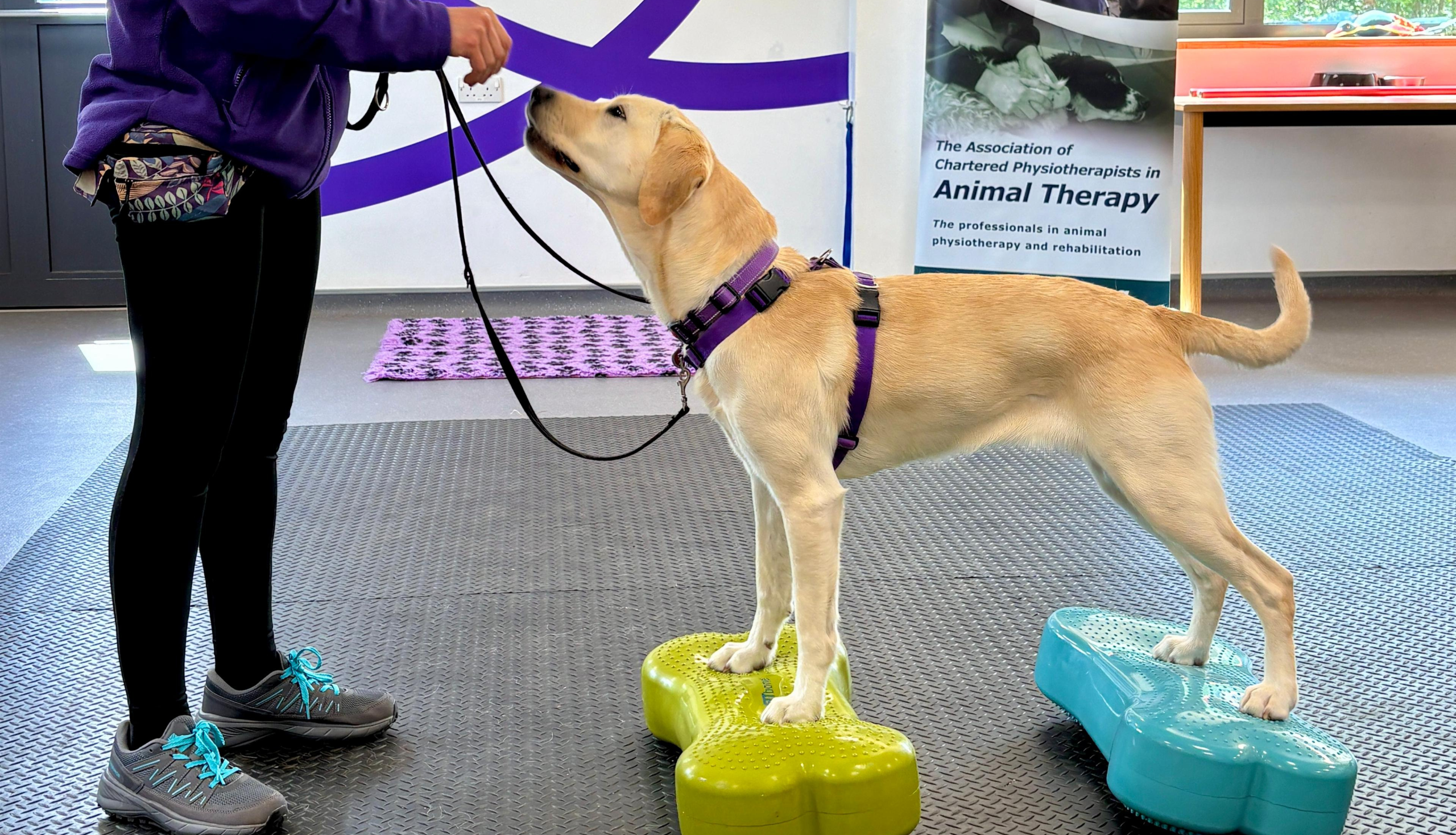
This blog is here to share helpful information about iliopsoas (hip flexor) injuries in dogs – to give you clear, supportive guidance so you can feel confident in spotting early signs and knowing when to seek advice.
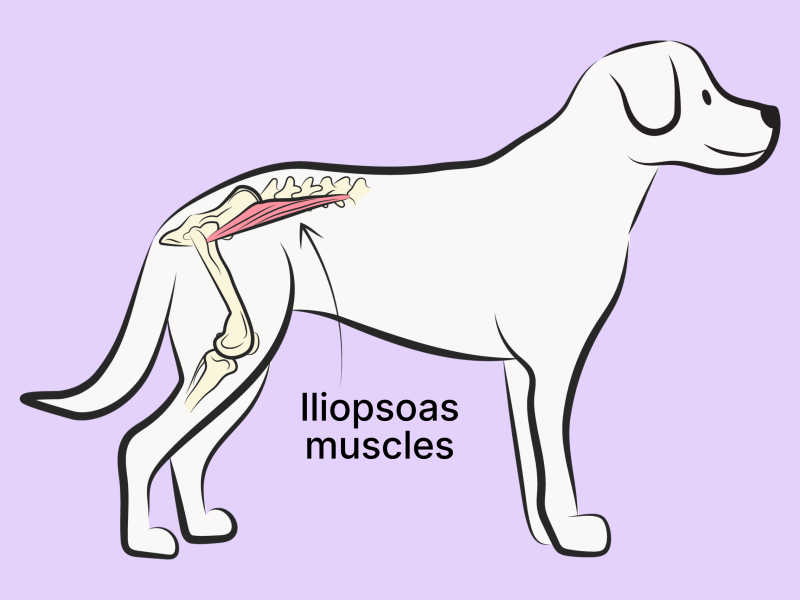
What is the iliopsoas muscle?
The iliopsoas is a key muscle in dogs that flexes the hip, stabilises the spine, and is prone to strains or overuse injuries, especially in active or sporting dogs. It is commonly known as the hip flexor.
Because of its location, injuries can be difficult to identify and can be mistaken for other conditions.
How do hip flexor injuries occur?
Most injuries happen when the muscle or tendon is stretched too far. This usually happens when the muscle is stretched too far because of speeding up quickly, slipping, jumping, or doing any activity that makes the muscle work too hard. Injuries can also build up slowly if the same movement is repeated.
Potential causes include:
- Slipping on smooth surfaces (including tiled or lino flooring in the home)
- Jumping in or out of vehicles
- Speeding up too fast when running
- Turning sharply during exercise or play
- Repetitive activities
- Not being strong enough to do the activity
- Feeling tired or not warming up
- Having another condition that makes injuries more likely, such as an existing problem with your dog’s bones or joints
Any dog can get a hip flexor injury, but active working and assistance dogs have a higher chance because their bodies work harder and do repetitive taskwork.
Signs and Symptoms:
Symptoms can vary depending on how bad the injury is. Some dogs will show obvious limping, but others may only show small changes in the way they move or behave.
Getting early help can make recovery much better, so any small changes in your dog should be taken seriously. Dogs often hide pain by moving differently. If the injury isn’t treated, it can cause problems in other parts of their body too.
Diagnosis
Diagnosing a hip flexor injury can be challenging, as symptoms look like other conditions. An ultrasound can show if there is an injury. Sometimes, your dog might need an MRI or CT scan if the problem is more complicated.
Treatment
Treatment depends on how bad the injury is, but usually includes:
- Rest: Minimal and controlled exercise to allow the muscle to heal. The home environment may also need to be changed to reduce the risk of further injury, such as not allowing your dog upstairs or not jumping into and out of the car.
- Pain relief: Dogs often need pain medication for this injury, and some may also need a muscle-relaxing medicine if recommended by their vet.
- Physiotherapy: A rehabilitation plan will be made for each dog. Regular checkups will help make sure the dog is healing well, and rehab plans can be changed if needed.
Returning to work
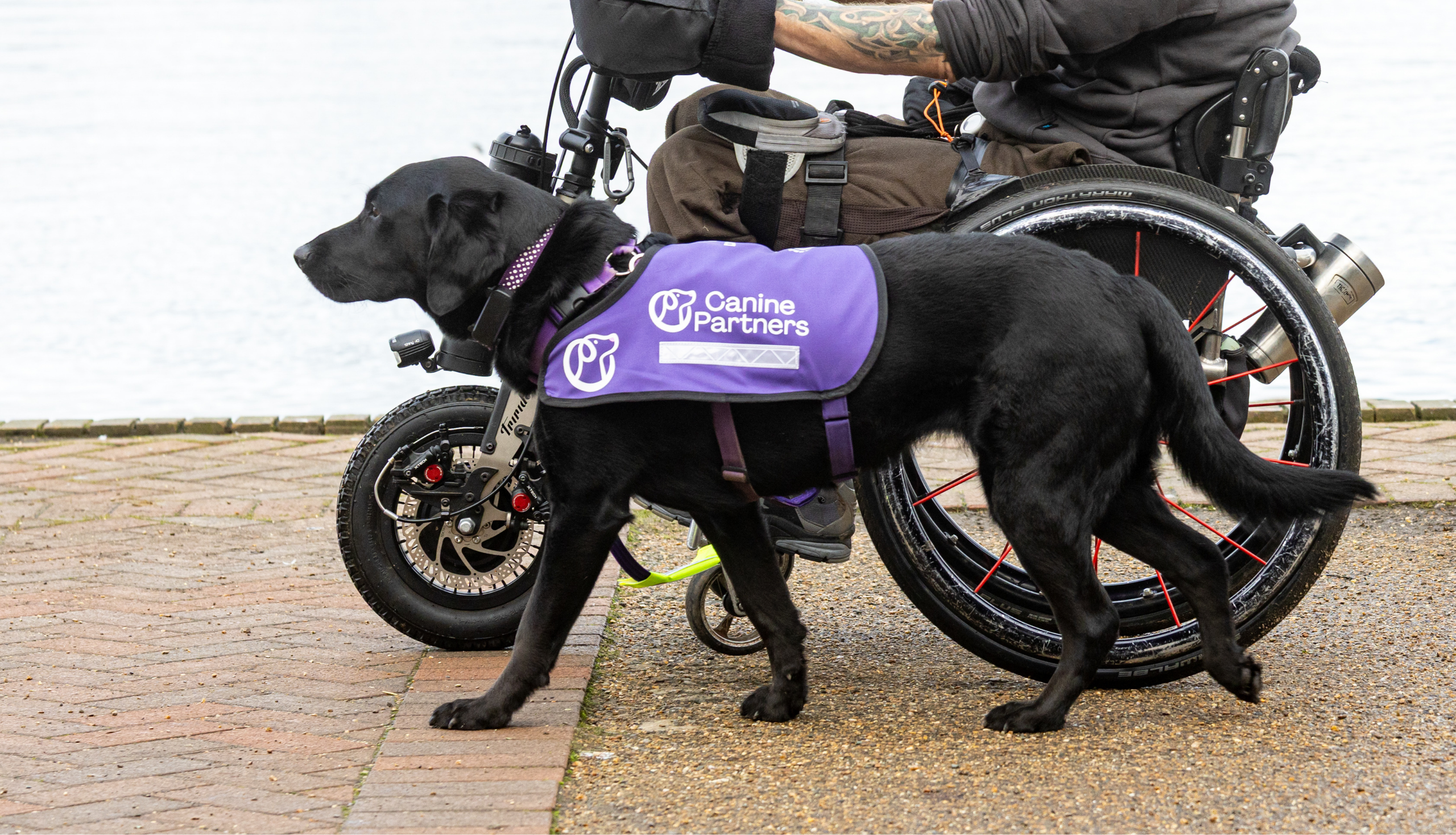
Returning an assistance dog to work too quickly can mean they get injured again or take longer to recover.Returning to work depends on assessments from a vet and physio. These injuries often need at least three months of rehabilitation, and once the dog has had a hip flexor injury, they are more likely to get it again. Ongoing management of the condition is important to lessen the likelihood of another injury later on.
Prevention is better than cure
Here are some things you can do to lessen the risk of your dog getting a hip flexor injury:
- Keep your dog at a healthy weight
- Have regular physiotherapy check-ups
- Ask your physiotherapist for special, tailored exercises to help make your dog stronger and fitter
- Let your dog warm up before exercise by doing ten minutes of relaxed walking
- Non-slip flooring in your home
- Safe vehicle access using a ramp
- Get your dog checked by a vet if their movement or behaviour changes, even in a small way
Finding the problem early and treating it quickly gives the dog the best chance of full recovery from a hip flexor injury.